What Is a Funnel Builder? A Complete Beginner's Guide
If you’re a small business owner trying to grow online, a marketer managing campaigns for clients, or an entrepreneur who just launched their first product, you’ve probably heard the phrase sales funnel more times than you can count.
But what exactly is a funnel builder, and why does everyone in digital marketing want to use them?

A funnel builder is the tool that turns your marketing strategy from theory into a working, revenue-generating system. Without one, you’re likely leaving a significant amount of money on the table – not because your product is bad, but because the path from someone hearing about you to someone paying you is broken or nonexistent.
For business owners, understanding funnel builder is the difference between scaling with a system and grinding without one. You can’t afford to lose leads to a disorganized buying process. For marketers, funnel builders are the difference between campaigns that convert and campaigns that simply generate traffic. And for entrepreneurs, getting familiar with these platforms is the first step toward building something that runs predictably with or without you in the room.
That’s exactly where a platform like Convertri comes in. Convertri was built specifically for business owners who want to create high-converting sales funnels without relying on developers, without fighting clunky tools, and without sacrificing page speed – one of the most overlooked factors in funnel performance. Since 2016, Convertri has given thousands of businesses a faster, simpler way to build funnels that actually convert.
Key takeaways:
- A funnel builder is a conversion system that guides visitors through a deliberate, step-by-step path from first contact to paying customer.
- Without a funnel, you're losing leads you've already paid for.
- Automation is what makes funnels work while you don't.
- You don't need technical skills to build a high-converting funnel. Modern funnel builders like Convertri are built for non-developers. Drag-and-drop editors, pre-built templates, and one-click integrations mean you can launch a professional funnel in hours, not weeks.
- Data is what separates a good funnel from a great one. Launching a funnel is step one. The businesses that win are the ones that monitor drop-off points, run A/B tests, and continuously optimize based on real numbers - not assumptions.
Convertri has been helping businesses build sales funnels, giving small business owners the same conversion tools once reserved for big businesses with large development teams.
What Is A Funnel Builder?
A funnel builder lets you design, build, and manage the entire customer journey. It's the engine behind your sales or marketing funnel.
Think of it this way: if your sales process were a bucket, a funnel builder patches the holes so you stop losing leads. Without one, potential customers fall through the cracks at every stage of the buying process. With one, you guide them step by step toward a purchase.
Unlike a traditional website builder, which is designed to present information, a funnel builder is purpose-built to convert visitors. It's no-code and drag-and-drop, meaning you don't need a developer to create high-converting pages. It's also automation-capable, so your marketing efforts keep working even when you're not.
You might be thinking: "Can't I just use a website?" Technically, yes. But you'll get far fewer conversions, and here's why.
Traditional websites are built to inform. Funnels are built to convert. When every page has one goal and one clear call to action, visitors are far more likely to take the next step in the buying process.
Higher conversion rates
Without a funnel, you're sending potential customers to a website full of distractions. Navigation menus, blog links, social media buttons, and multiple calls to action are competing for attention. A dedicated funnel removes all of that.
The result: higher conversion rates on every page.
Time saved with automation
Without automation tools, you're chasing every lead manually. That means sending emails by hand, following up one by one, and moving people through stages yourself.
A funnel builder sets up automation rules so your marketing funnels run 24/7 without you lifting a finger. Leads get follow-up emails, trigger-based sequences fire automatically, and your sales cycle continues even while you sleep.
Professional design without coding
You don't need a developer or designer to build professional sales pages. The drag-and-drop editor in any decent funnel builder lets you create polished, mobile-responsive pages in hours. For small teams and solopreneurs, this levels the playing field against big businesses.
Data-driven insights
Every funnel builder worth using gives you real data. You'll see where users drop, which pages convert, what your revenue looks like at each stage, and what's working. This lets you continuously improve your funnel structure and make smarter decisions with your marketing efforts.
Scalability
As your business grows, your funnel strategy needs to grow with it. Funnel builders let you build multiple funnels for different products, target audiences, or campaigns. You don’t need to rebuild from scratch every time. The platform scales so you don't have to.
Here's a step-by-step walkthrough of the funnel-building process from start to launch:
Step 1: Choose a template
Most funnel builders come with a library of pre-built templates for common use cases. Convetri, for instance, has pre-built templates for lead generation, product launches, webinars, coaching offers, digital products, and more. Pick one that matches your goal, or start from a blank canvas if you want full control.
Step 2: Customize your pages
Using the drag-and-drop editor, customize each page in your funnel, including the headline, images, copy, buttons, videos, and layout. No coding required.
Convertri's editor, for instance, is one of the fastest on the market, giving you pixel-perfect control with near-instant page load times, a major factor in keeping users from dropping off.
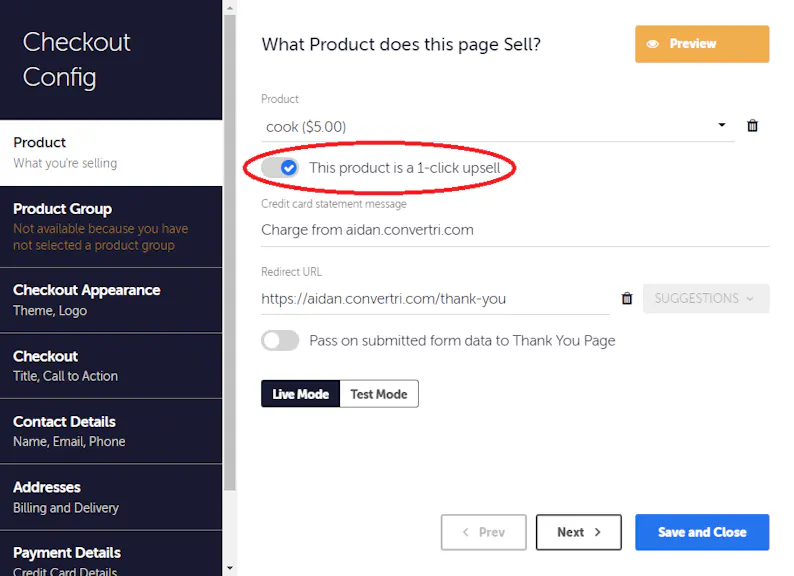
Step 3: Set up your automation
Configure your automation rules.
What happens when someone opts in? They get added to your email list and receive the first email in your automated email sequences.
What if they abandon checkout? A follow-up email goes out automatically.
This is where funnel builders separate themselves from basic website builders.
Step 4: Integrate your tools
Connect your payment processor, CRM, email marketing software, and any other tools in your stack. A good funnel builder makes these integrations straightforward, usually with a few clicks and no developer needed.
Step 5: Launch and track results
Once live, monitor your funnel using built-in analytics. Look for drop-off points, run A/B tests on your key pages, and optimize based on real data. Tracking performance is what separates a profitable funnel from one that just looks good.
The whole process, from template selection to a live funnel, can take a few hours for basic funnels, or a few days for a complete funnel blueprint with upsells, downsells, and full email sequences.
Try Convertri today!
People often confuse funnel builders with landing page builders. They're related, but they're not the same thing. Here are their key differences:
Landing page builder
A landing page builder helps you create individual pages. It's optimized for a single-page experience - a headline, some copy, a form, or a button. Great for generating leads or promoting a single offer, but it stops there. Once someone submits the form, you're largely on your own.
Funnel builder
A funnel builder creates a connected series of pages that guide someone through the complete buying journey, from the first landing page, to an offer page, to a checkout page, to a thank-you page, and then into a post-purchase email sequence. It also includes automation rules, analytics across every funnel step, CRM integration, and often email marketing software built in.
Modern AI funnel builders can speed this up by generating funnel structure, copy, and page flow based on your business goals.
When to use each
- Use a landing page builder if you need a single opt-in page and you're handling the rest of the customer journey with separate tools.
- Use a funnel builder if you want to build a complete funnel, automate your follow-up, run A/B tests, and track performance end-to-end - all from one platform.
For most businesses serious about converting potential leads into paying customers, a funnel builder is the right tool. The extra features pay for themselves quickly.
Ready to build your first funnel? Here's a practical beginner's roadmap for using a funnel builder like Convertri:
1) Define your goal.
What do you want your funnel to accomplish? Generate leads? Sell a product? Book calls?
Start with one goal and one target audience. Trying to do everything with a single funnel is a common mistake that leads to poor conversion rates.
2) Map your funnel structure.
Sketch out the funnel steps before you start building.
What pages do you need?
What's the next action at each stage?
A basic funnel might be: landing page → thank-you page → email sequence. A more advanced complete funnel might include an order bump, an upsell page, and a downsell offer.
3) Choose your funnel builder.
Look for a platform that matches your skill level, budget, and goals. Prioritize ease of use if you're just starting out.
If you're scaling, look for speed, unlimited funnels, and advanced automation. If page speed matters to you, and it should, because slow pages kill conversions, Convertri is built with speed as a core feature.
What Does A Funnel Builder Do?
A funnel builder handles several critical functions across your marketing and sales process. Here's a breakdown of what you get:
Landing page creation
At its core, a funnel builder lets you create landing pages - focused, distraction-free pages designed to drive a single action. Whether you're capturing email addresses, selling a product, or booking a discovery call, landing pages are the entry point of any complete funnel. Most funnel builders focus heavily on making these pages fast, beautiful, and optimized for conversion rates.
Email automation
Most funnel builders integrate directly with email marketing tools or include built-in email marketing software. This allows you to set up automated email sequences that follow up with leads automatically. Instead of manually sending follow-up emails after every opt-in or purchase, your system does it for you, on schedule, every time.
Integration capabilities
Funnel builders integrate with your existing tech stack: payment processors, CRMs, webinar platforms, email marketing software, and other automation tools. This turns your funnel into the command center for your entire sales cycle.
Analytics and reporting
Built-in analytics let you track performance at every stage. You can identify drop-off points (the places where users drop out of the buying journey). Then, fix them before they cost you more sales. Without this visibility, you're flying blind and losing leads without knowing why.
Lead management
Funnel builders help you capture, segment, and nurture potential leads throughout the buying journey. Whether you're running basic funnels or complex multi-step campaigns, the platform keeps your pipeline organized and your lead nurturing running automatically.
Why Do You Need a Funnel Builder?
How Do Funnel Builders Work?
Funnel Builder vs. Landing Page Builder
| Feature | Landing Page Builder | Funnel Builder |
|---|---|---|
| Create individual pages | ✓ | ✓ |
| Multi-step funnel structure | ✗ | ✓ |
| Email automation | ✗ (usually) | ✓ |
| Checkout pages | ✗ (usually) | ✓ |
| Analytics across funnel steps | Limited | ✓ |
| CRM integration | Limited | ✓ |
Is a Funnel Builder Right for Your Business?
You'll benefit most from a funnel builder if:
- You sell online and want to improve your conversion rates
- You're generating leads but struggling with converting leads into actual sales
- Your marketing efforts are mostly manual and eating up too much of your time
- You want to build sales funnels without relying on a developer
- You're running multiple campaigns for different products or target customers
- You want to stop losing leads to a broken or non-existent follow-up process
Types of businesses that see the biggest ROI:
- Most brands use funnels to upsell, cross-sell, and recover abandoned carts. It turns one-time buyers into higher lifetime value customers. Even a single high-converting funnel can dramatically improve profit margins.
- Service providers, such as consultants, agencies, and freelancers, use funnels to book discovery calls and qualify prospects before they ever pick up the phone. The funnel does the selling before the conversation starts.
- Coaches and course creators use funnels to fill webinars, sell digital products, and nurture potential customers through a longer buying journey. Many run multiple funnels simultaneously for different offers.
- SaaS companies use funnels to drive free-trial signups, onboard new users, and convert free-trial users to paid subscribers. The funnel handles the entire sales cycle automatically.
If your business has a sales process (and every business does), a funnel builder can make it more efficient, more automated, and more profitable.
Getting Started: How to Build Your First High-Converting Funnel
4) Build your pages.
Use pre-built templates to create your landing page, sales pages, and thank-you page.
Keep each page focused on one action. Remove every distraction that doesn't serve the conversion goal.
5) Set up your email sequences.
Write your follow-up emails and connect them to your funnel triggers. Even a basic 3-email sequence - delivered automatically after someone opts in - can dramatically improve your conversion rates and reduce the number of leads you lose after the initial interaction.
6) Test everything.
Go through the funnel yourself as a customer would. Check that forms work, the payment process works, emails arrive, and every link goes to the right place. Then run A/B tests on your most important pages to start optimizing with real data rather than guessing.
7) Launch and optimize.
Go live, monitor your analytics, and look for drop-off points.
A funnel is never truly finished; you're always improving. The businesses that build better funnels over time are the ones that track performance obsessively and act on what they find.
If you want to determine the page’s conversion rate, you can see it in the page’s left-hand corner:
Convertri makes all of this easier. As one of the fastest funnel builders on the market, Convertri lets you build beautiful, high-converting funnel pages without a developer, and without the slow page load times that quietly kill conversions. Whether you're creating your first funnel or managing multiple funnels at scale, Convertri gives you the tools to build, test, and grow.
FAQs
What does a funnel builder do?
A funnel builder helps you design and automate the complete customer journey. It creates connected sequences of pages (landing pages, sales pages, checkout pages) combined with email automation, lead management, and built-in analytics.
The goal is to convert more potential customers without extra manual effort. Most funnel builders focus on removing friction from the buying process so more leads reach the end of the funnel.
Why do you need a funnel builder?
If you're generating traffic but not converting it into sales, you need a funnel builder. Traditional websites aren't optimized for conversion because they offer visitors too many options, too many distractions, and no clear path.
A sales funnel builder removes all that, guides users step by step through the buying journey, and automates follow-up so no lead slips through the cracks. It's the difference between hoping people buy and actively guiding them toward a purchase.
How much does a funnel builder cost?
Funnel builder pricing varies widely depending on the platform and features included. Some platforms offer a free plan with limited capabilities. These options are useful for testing, but rarely sufficient for serious marketing efforts.
Most paid plans range from $30 to $300+ per month. Convertri offers competitive pricing with no caps on funnel count. That means you can create unlimited funnels and run campaigns for multiple products without paying more.
When comparing costs, look beyond the headline price: some platforms charge extra for email marketing, A/B testing, or premium templates, which can significantly increase your real total cost.
Conclusion
Understanding what a funnel builder is and what it can do for your business is one of the most valuable things you can do as a small-business owner, marketer, or entrepreneur serious about growth.
The reality is straightforward: traffic without a funnel is just wasted potential. You can have the best product in your market, but if the path from "interested visitor" to "paying customer" is unclear, broken, or entirely absent, you'll keep losing leads you should be winning. Every visitor who leaves without converting is a cost you've already paid in ads, in content, in time.
A funnel builder fixes that. It gives you a structured, automated, data-driven way to guide potential customers through every stage of the buying journey. It replaces manual follow-up with automated email sequences. It replaces guesswork with A/B testing. It replaces scattered tools with a single platform that connects your entire sales process.
Traditional funnel builders used to require technical knowledge, expensive developers, and hours of setup just to get a basic funnel live. Platforms like Convertri have completely changed that. You get a fast, flexible, beginner-friendly tool that handles the complexity for you.